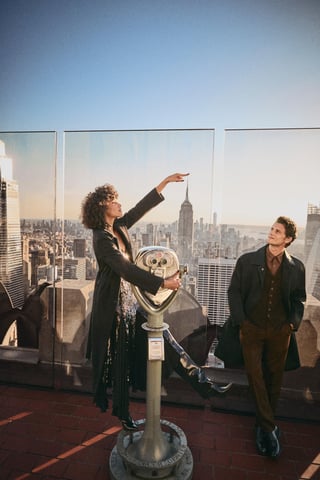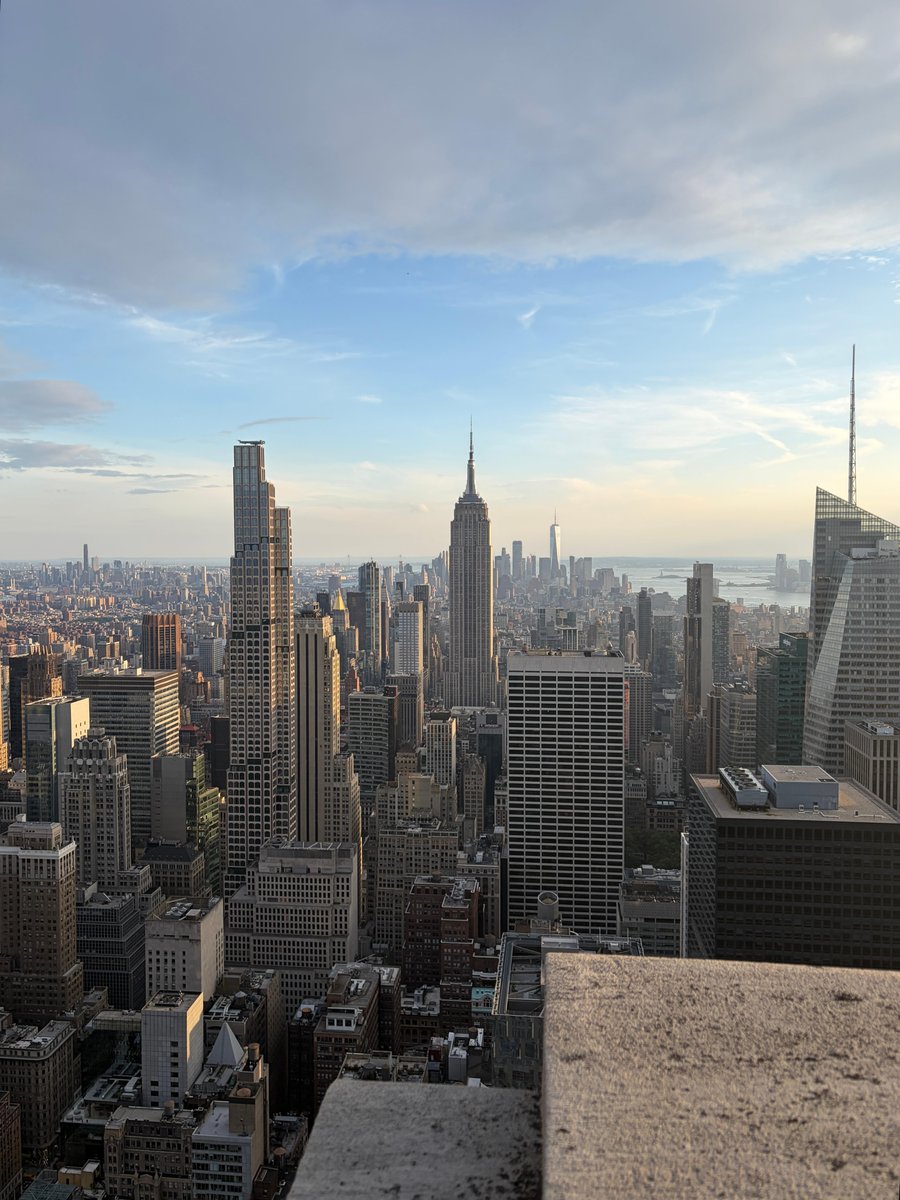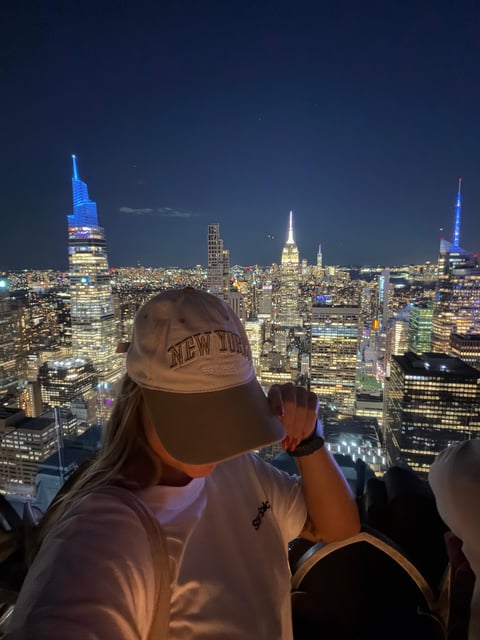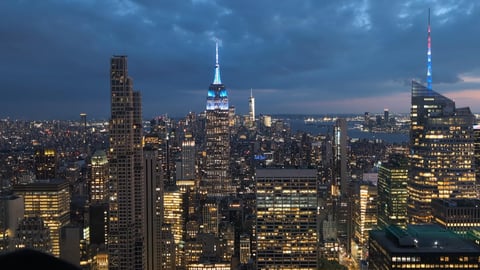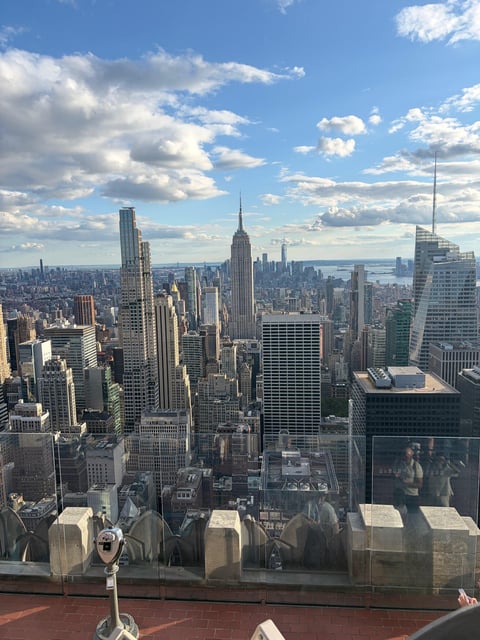
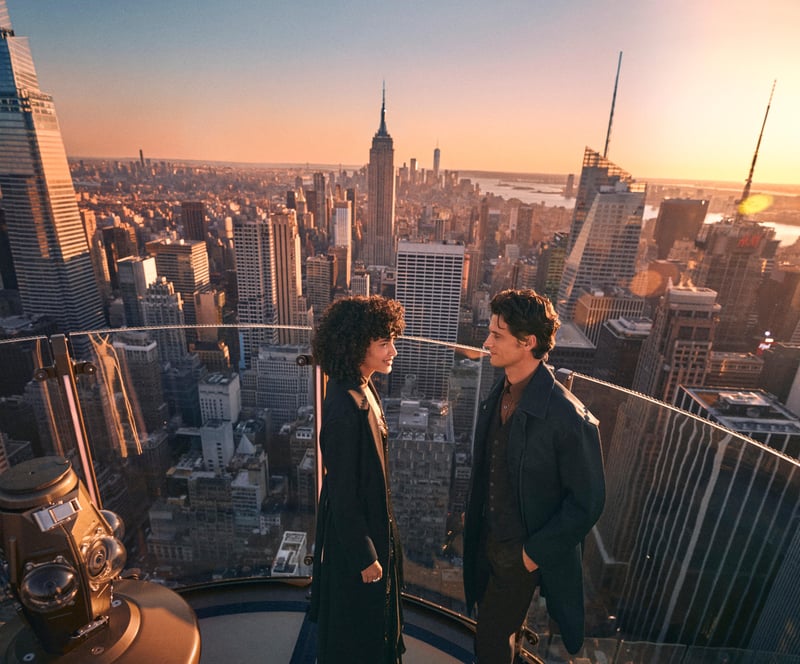
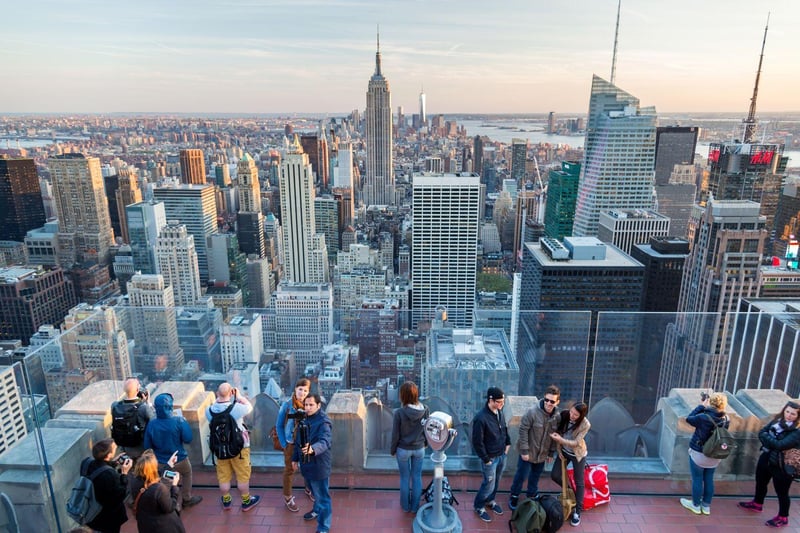
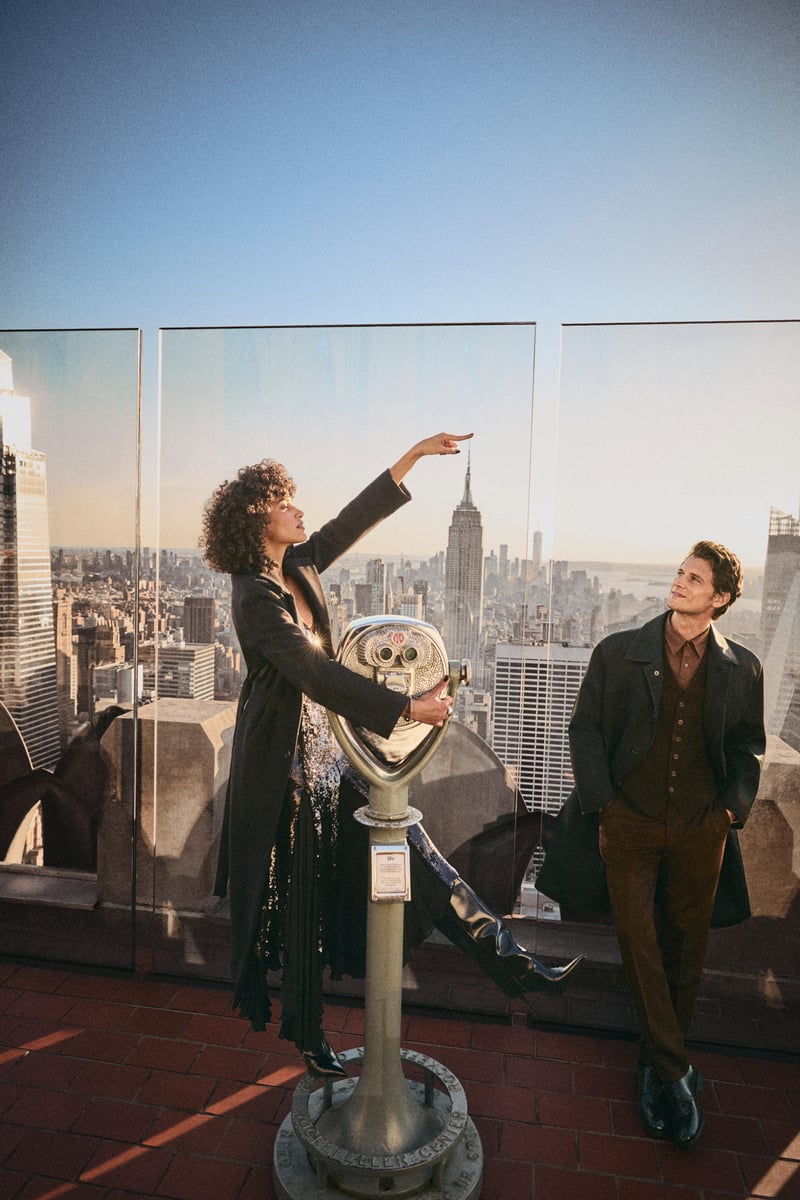
Every other Midtown deck sells you the skyline. This one sells you the Empire State Building, because it is the only major deck in New York that the Empire State Building is not on. Stand at the south rail on the 70th floor and the 1931 spire sits dead centre, lit from below, at about the distance a camera wants it. Go up the Empire State instead and you get a fine view of everywhere except the building under your feet — which is the building you flew here to photograph.
That is the entire case for Top of the Rock, and it is a good one. It is also, at 850 ft, the lowest of the five major New York decks. Those two facts are the same fact.
The one deck you can see the other four from
From the top tier you can pick out every deck you were choosing between, which makes this a useful place to settle the argument. West, in Hudson Yards, the wedge of Edge juts off 30 Hudson Yards at 1,131 ft. South, the Empire State. Further south and much higher, One World Observatory at 1,268 ft. East, over Grand Central, the mirrored box of SUMMIT One Vanderbilt.
Ranked honestly from up here: SUMMIT is not really an observation deck, it is a mirrored art installation you happen to stand inside, and you should buy it as that or not at all. Edge is engineered fear — the cantilever, the glass floor panel, the outward-leaning rail — and it delivers on that. One World is the downtown-itinerary deck, the one that makes sense on the day you are already at the 9/11 Memorial. The Empire State has the atmosphere of old New York and the longest hours, and it cannot show you itself.
Top of the Rock is the photographers' deck. That is not a consolation prize, but it is a narrow claim, and if photographs are not why you are going up a building, one of the other four is a better ticket.
Thirty feet decides it
There are three levels and only thirty feet between the bottom and the top: the 67th at 820 ft, the 69th at 840, the 70th at 850. The height is not the difference. What separates them is what stands between you and the air.
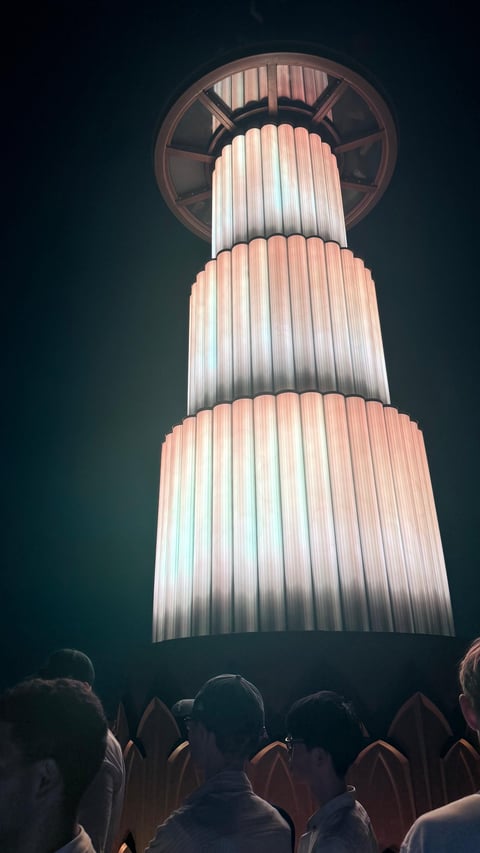
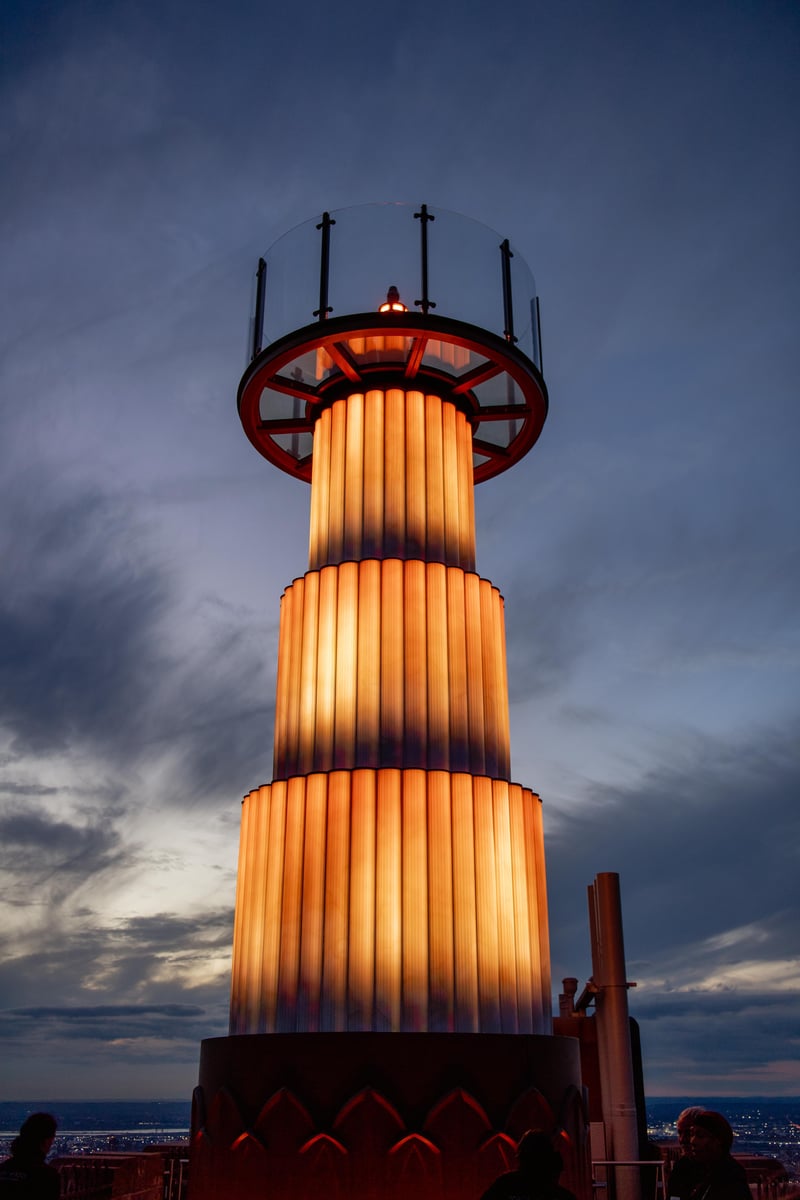
The 67th is largely indoor, with terraces facing north and south — where you retreat when the wind comes off the Hudson. The 69th is the Breezeway, a terrace that runs the full way round behind glass. The 70th is open air with nothing at eye level: no glass, no mesh, no fencing in the frame. Almost every American observation deck puts something between your lens and the drop. This one does not, and that is what you are paying for.
So the 67th and 69th are the weather insurance, not the attraction. If you go up and stay on them, you have bought the wrong ticket.
Closed for nineteen years
The original deck opened in the spring of 1933 and was decorated as the sun deck of an ocean liner — Adirondack chairs, potted evergreens, an outdoor bar. It closed in 1986 and stayed closed for nineteen years. What reopened on 1 November 2005 was a different thing: Gabellini Sheppard's redesign, more than 9,500 square feet of outdoor deck, and timed-entry tickets built specifically so the queue would not become the experience.
The elevator is worth paying attention to instead of your phone. It climbs at 1,200 feet per minute and the ride takes 42 seconds, under a glass ceiling that runs projections from the 1930s forward as you rise. It is a short, well-made piece of theatre, and it is over before most people look up.
How $42 becomes $72
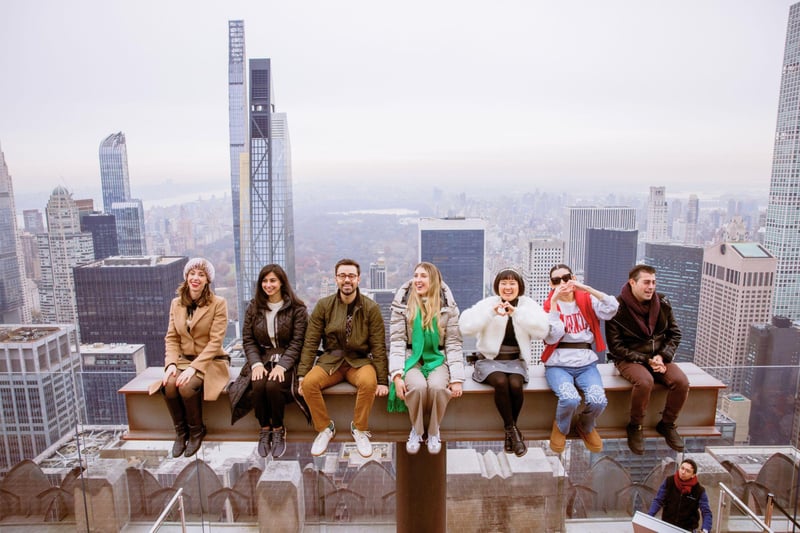
Timed admission starts at $42. The Beam — the paid photograph on a recreated girder from the 1932 lunch-atop-a-skyscraper picture — comes bundled at $57, so the increment is about $15. All-inclusive, which adds SKYLIFT, is $72. The VIP pass runs $185 and up, and the issuer's own pages have quoted it inconsistently, so read what you are buying at checkout rather than trusting a number you saw earlier.
Two things about the Beam. It is a staged studio photograph with a skyline behind it, not a thing that happens on the deck; and visitors regularly report being asked to put overshoes on for it, which several say ruined the picture they paid for. The free views are the product. Skip the Beam and put the $15 toward the sunset slot.
Compare prices before you click. Go City lists a single Top of the Rock ticket at $60 — more than the venue charges directly. Rockefeller Center also sells its own ticket through GetYourGuide from $46 with free cancellation, which is worth having in a city where the weather decides whether the view exists at all.
The rail nobody stands at
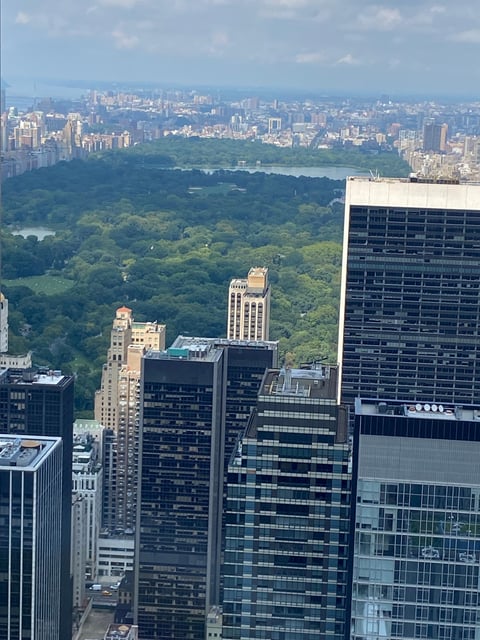
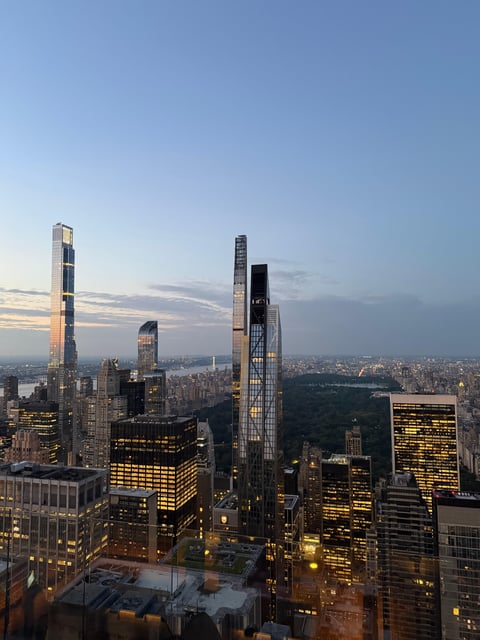
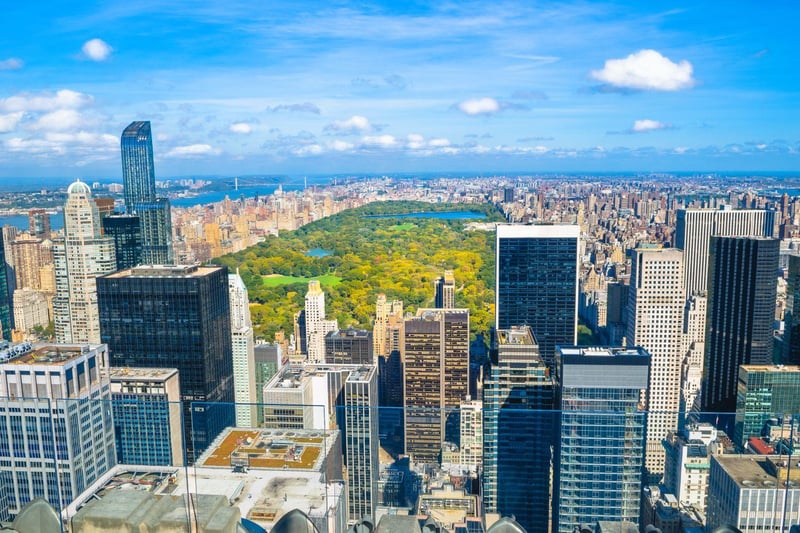
Everyone walks out onto the 70th and turns left, toward the Empire State. The north rail stays comparatively empty, and it is the one that frames Central Park — the full rectangle running away from you to the reservoir and the towers on the far side. No other major New York deck is positioned to give you that: the downtown decks are too far away and the Empire State is on the wrong side of it. Give the north rail ten minutes before you give the south rail anything.
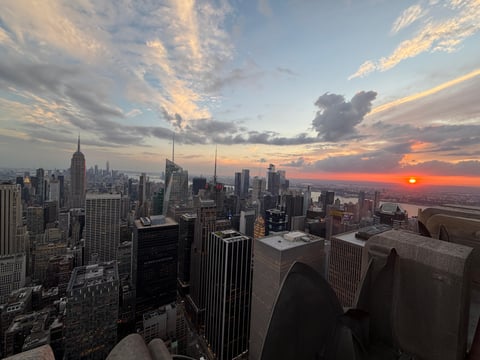
Book a slot 30 to 45 minutes before sunset and you get the transition rather than one state or the other — the south view lights up while you are standing in it. In high season those slots go two to three weeks out. Doors are open daily 8am to midnight with the last elevator at 11:10pm, so a late slot is a real option and a quiet one.
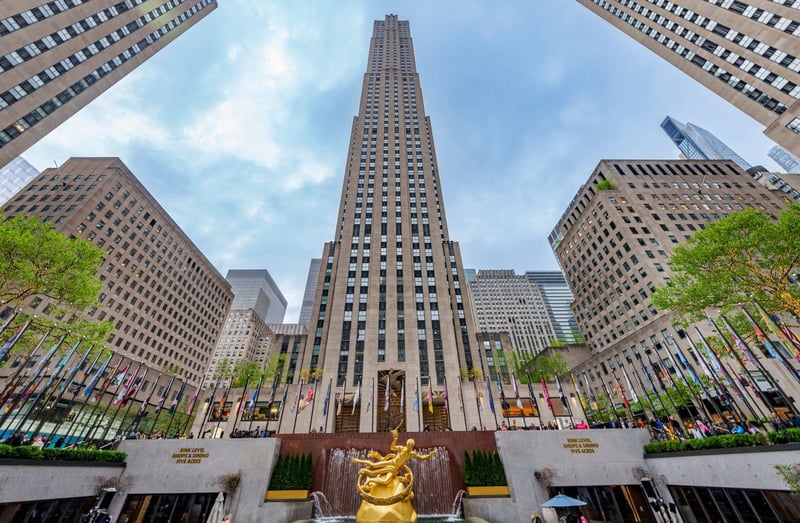
One warning that has nothing to do with the deck: between the tree lighting and New Year, Rockefeller Center at street level is close to impassable. The deck is fine. Getting to the lift is the problem.